|
Can they use their abilities in the course of their mandatory voluntary community service? Or maybe, the question is, how to use them without running into the bar on endangering other people or themselves?
|
|
The most disturbing part of A View from a Hill (2005) is the beauty of Fulnaker Abbey. From a dry slump of stones in a frost-crunched field, it soars in a flamboyance of turrets and spires, a dust-gilded nave whose frescoes have not glowed in the wan autumn sun, whose biscuit-colored fluting has not been touched since the dissolution of the monasteries. His customarily tight face equally transfigured, Dr. Fanshawe (Mark Letheren) turns in wonder through the rose windows of this archaeological resurrection, a ruin to the naked, post-war eye, through the antique field glasses which first showed him the distant, fogged, impossible prospect of its tower in a chill of hedgerows and mist, medievally alive. In a teleplay of sinister twig-snaps and the carrion-wheel of kites, it's a moment of golden, murmuring awe, centuries blown like dandelion clocks in a numinous blaze. It is a product of black magic only a little more grimily direct than most reconstructions of the past through a lens of bone and it would be far more comforting as a lie.
Visible in appropriate hindsight as the first in the irregular revival of A Ghost Story for Christmas (1971–78), A View from a Hill was adapted for the small screen by Peter Harness and faithfully preserves the antiquarian creep of its source M. R. James while remixing much of the detail around its central conceit, its adjustments of period and tweaks of class taking the story from an eerie sketch of the skull beneath English pastoral skin to an explicit meditation on the double edges of disinterring the past, specifically who decides what the transcendence of time is worth and who foots the bill. It can be mistaken for a purely material question. Aristocratically cash-strapped and as tone-deaf to transcendence as to manners, Squire Richards (Pip Torrens) would be the first to admit he's only called in an old school favor from the Fitzwilliam because his inheritance of antiquities might have something in it to bail out the stately crumbling home. "Never really my thing, standing in a field, grubbing about in the past. One wants to get oneself out there, don't you think? Get a bit of life." Fortunately for that piece of breathtaking tactlessness, Fanshawe came prepared to be condescended to, his archaeological credentials carefully organized to offset his grammar-school accents and implicitly junior standing, packed off to the countryside to investigate a miscellany of Crimean souvenirs and unremarkable Roman ware. He was not braced to discover a double of sorts in the amateur figure of F. D. Baxter (Simon Linnell), the village antiquary still remembered suspiciously for the macabre chime of his death with the obsessions which preceded it. "Fancied himself an archaeologist, like yourself . . . Used to be very bothered with ransacking and rummaging all the history of the place." To be classed with a half-educated watchmaker predictably flicks his defenses, but Fanshawe seems nevertheless to feel some sympathy for this ill-reputed character whose notes led unerringly to worthwhile finds—the kind of professional half-life he might have had to settle for himself, a pre-war stratified generation or two ago. Besides, Baxter was just as transfixed by that mysterious apparition of an abbey, judging from the beautiful, precisely drawn elevation that Fanshawe finds among his papers, complete in every corbel and tracery and dated to 1926 when the squire and the less eccentric evidence of his senses assure him that nothing remains but the cold little scatter of stones that he cycles out to inspect by the rime-glint of afternoon, looking as he paces the dimensions of its absence in his fallow windbreaker and the overcast of his own breath at once tougher and more contemplative, on his own ground for once instead of the back foot of his diligent, tiresome job. His fingers move over a half-buried, moss-crisped stone as if its lost architecture were held like amber within it. Even an inexplicable wave of panic after a puncture at the wooded top of the locally named Gallows Hill can't dim his fascination with the site and the brass-bound binoculars which seem to pierce time to show him more than any survey or excavation or illustration ever could, the past itself, not its denuded, disarticulated remains. Reflections from the Dead: An Archaeological Journey into the Dark Ages, reads the title of the manuscript he brought to edit in his spare time. He looked, too, through the eyes of that curious, earth-browned skull-mask that came, like the binoculars, out of Baxter's collection: "Some of it is pretty bizarre." Of course, there all his troubles began.
James reserves this fact for the punch line of "A View from a Hill" (1925), the ickily logical explanation for the optical disillusion by which placid scenery may become a deep-soaked site of violence. The teleplay drops it square in the middle of its 40 minutes, a night-flashed miniature of folk horror narrated by the aged, watchful manservant Patten (David Burke) with masterful suggestion. "My father served on the inquest. They returned a verdict of unsound mind." Frustrated with the human limits of fieldwork and too much alone with the tools of his trade, Baxter is locally averred to have taught himself as much necromancy as archaeology when he rendered the bones of the dead of Gallows Hill in order to paint the lenses of his field glasses into ghost-sight, an optical coating of the unlaid past. His rain-caped figure sketching on an autumnal hillside would be a study in the picturesque except for the feverish avidity of drawing a dead building from life, the success of his spectral optics which merely conceal the grisliness of their cruder predecessor, the freshly unearthed front of a skull. Harness does not have him cry as in the original story, "Do you want to look through a dead man's eyes?" but visualizes the line until we wonder even whether it accounts for the accuracy of the unexcavated sites left behind in his notes, a sort of ground-penetrating radar of the dead. Or he had a real feel for the tracks of time in the land, for all the good it eventually did him: "What," the squire greets the payoff with meta-modern skepticism, obviously not the target audience for antiquarian ghost stories, "the hanged men came for Baxter because they didn't like their bones being boiled?" Fanshawe for whose benefit this ghoulish moral was actually exhumed doesn't commit himself that far. "It's an interesting story." Relocating it complicates him as a protagonist, but not beyond what either Jamesian canon or extra-diegetic relevance will bear. By the time he brings the binoculars back to the sun-whitened field where the abbey waits under its accretion of centuries, he knows too much to be doing it. Not only has he heard the story of their ill-fated creation, he's seen the drawings that support it, even experienced a dreamlike encounter in the bathroom of all places where the water swirled as cloudily as leached bone and the face flickering like a bad film behind its skull's visor belonged to a pale and crow-picked Baxter. As if their stolen second sight were as much of a beacon as the torch he flashed wildly around in the restless dusk, Patten attributed his terrifying sense of woodland surveillance to his possession of "those glasses." It makes any idea of using them feel intolerably foolhardy of Fanshawe, but more importantly it makes him complicit. Despite its cadaverous viewing conditions, Fulnaker Abbey is not an inherently cursed or haunted space: its eeriness lies in its parallax of time, the reality of its stalls and tapers in the twelfth century as much as its weather-gnawed foundations in the twentieth in one of those simultaneities that so trouble the tranquil illusion of a present. To anyone with a care for the fragility of history, especially a keen and vulnerable medievalist like Fanshawe, its opening into the same three mundane dimensions as a contemporary church is a miracle. For the first time as it assembles itself through the resolving blur of the binoculars, we hear him laugh in unguarded delight. None of its consecrated grandeur is accessible without the desecration of much less sanctified bodies, the poachers and other criminals who fed the vanished gibbet of Gallows Hill and were planted thick around it as the trees that hid their graves over the years until a clever watchmaker decided that their peaceful rest mattered less than the knowledge that could be extracted from their decayed state. It happened to generate a haunting—a pocket timeslip constructed without the consent of the dead who would power it, everyone's just lucky they stayed quiescent until attracted by the use of the device again—but it would not have been less exploitative had Baxter done his grave-robbing and corpse-boiling with supernatural impunity. No matter how gorgeous the temporally split vision from which Fanshawe begins to draft his own interior views, it's a validation of that gruesome disrespect and it's no wonder the dead lose no time doing him the same honors as the man who bound them to enable it.
Directed by Luke Watson for BBC Four, A View from a Hill is inevitably its own artifact of past time. The crucial, permeable landscape—Herefordshire in the original, the BBC could afford the Thames Valley—is capably photographed at a time of year that does most of its own desaturation and DP Chris Goodger takes visible care to work with the uncanniness of absence and daylight, but the prevalence of handheld fast cutting risks the conscious homage of the mood and the digital texture is slicker than 16 mm even without the stuttering crash zoom that ends in a superfluous jump scare; it does better with small reminders of disquiet like a red kite hovering for something to scavenge or the sketch of a burial that looks like a dance macabre. The score by Andy Price and Harry Escott comes out at moments of thinned time and otherwise leaves the soundscape to the cries and rustles of the natural world and the dry hollow of breath that denotes the presence of the dead. Fulnaker Abbey was confected from select views of the neo-Gothic St Michael's in Farnborough and Fanshawe's doctoral thesis sampled ironically from a passage of Philip Rahtz: The gravestones are indeed documents in stone, and we do not need to excavate them, except perhaps to uncover parts of the inscription that have become overgrown or buried . . . As a three-and-a-half-hander, the teleplay shines. Letheren's mix of prickliness and earnestness makes him an effective and unusual anchor for its warning to the heedless; even if that final explosion of wings in the brush is as natural as it sounds, Fanshawe will never again take for granted a truly dead past, nor his own right to pick through it as though it had no say in the matter. Taciturn except when essentially summarizing the original James, Burke avoids infodump through little more than the implication that Patten keeps as much to himself as he relates, while Torrens in tweed plus-fours and a total indifference to intellectual pursuits more than occasionally suggests a sort of rusticated Bertie Wooster, making his odd expression of insight or concern worth taking note of. Linnell as the fatally inventive Baxter is a shadowy cameo with a spectral chaser, but his absorbed, owlish face gives him a weird sympathy, as if it never did occur to him how far out of reason he had reached into history. "Always had some project on the go or something. And pretty much the last job he did was finishing off those glasses you took." It is characteristic of James as a troubler of landscape and smart of the teleplay not to tamper with his decision to make the danger of their use entirely homegrown. Who needs the exoticism of a mummy's curse when the hard times of old England are still buried so shallowly?
I seem to have blown the timing by watching this ghost story for the solstice rather than Christmas, but it's readily available including on the Internet Archive and it suited a longest night as well as somewhat unexpectedly my own interests. I might have trimmed a few seconds of its woodland, but not its attention to the unobjectified dead. With all his acknowledged influence from James, I can't believe John Bellairs never inflicted a pair of haunted binoculars on one of his series protagonists—a dead man's likeness transferred through his stolen eyes is close but no necromantic banana. This project brought to you by my last backers at Patreon.Current Music: Belbury Poly, "The Geography"
|
|
When I discovered Olivia Newton-John's father took Rudolf Hess into custody during World War II.
|
|
It turns out if you really want to raise the profile of your writers' union, all you need to do is announce LLM-generated works are eligible for awards, as long as they are not entirely LLM-generated.
|
|
Tonight in the basement of the Harvard Book Store where the part of the HVAC which replaced the original location of mysteries and crime makes enough industrial noise for me to wear earplugs while browsing, I gestured a choice of directions at a T-junction of shelves to a woman laden with bags in both hands who responded in an immediate tone of cheerful accusation, "You're half a man," and then before I could say anything and see which way she reacted, "Half and half. Cream. I'm just kidding," on which she turned around and left the way she came. Happy Saturday before Christmas?Current Music: The Beaches, "Last Girls at the Party"
|
|
I probably didn't need to, but I have taken all of next week and the following Monday off. My workload is fucking insane but fuckit, I can only do what I can do, as multiple people told me this week.
I have just borrowed Cahokia Jazz and a YA novel by EK Johnston from the library, so I'm set for that. And I'm meeting my oldest friend in the world in LA next month, so she can go to the desert for the first time, so we're sending each other links and stuff, and that's fun.
Tonight I will set up the batter for those insane Dark and Stormy cookies -- though I do them as bars, it's so much easier and the texture is more controllable -- and tomorrow I will make a crustless quiche for my BIL's birthday. Sunday is a cookie exchange, Monday is wrapping. It's gonna be a nice week, or it would be if not for all the rain.
Why did the rain wait until I was on vacation?
Happy holidays to y'all!
|
|

A determined artist faces potentially lethal criticism.
The Merro Tree by Katie Waitman
|
|
I quit two phone games recently and want to work through some feelings about it.
Farm RPG
I started playing Farm RPG a while back because I was looking for something that was like Stardew Valley but more idle focused.
On the surface this is the case, but it’s not so much an idle game as it is a clicker. Some resources accumulate over time once you've bought the upgrade, but for the most part you are clicking to obtain them. Fishing is a twitchy “click on the moving dot” affair. Farming involves waiting (minutes, hours, days) or expending an item, but is not very profitable.
There are villagers to befriend (not marry) and quests to complete, but there’s a cynical snideness to the writing that didn’t really work for me. Some quests require items you get from sending your animals to the slaughterhouse, which I didn't want to do and used workarounds that just take longer (weeks/months instead of days.)
All of this I could deal with but I’ve reached a point where I cannot progress in the story without putting the raptors I have raised in a fight club and I just don’t want to. They’re good raptors! The only alternative I could see would involve many, many more months of grinding.
And then one day I missed finishing my daily quests, took a step back and asked, am I actually enjoying this game? Am I looking forward to doing the daily tasks or is it tedious?
So I’ve stopped.
nb. there is a social aspect to the game which I turned off shortly after starting. Maybe I would have enjoyed it more if I engaged with the community.
Pokémon TCG Pocket
If you want the feeling of opening packets of collectible cards with cute art but don’t want the clutter or to spend actual money, this game is almost perfect! You can open 2 packs a day for free! You can make decks and battle (against the computer or online)!
You can spend real life currency on a monthly subscription to open an extra pack a day, or à la carte to reduce the time until you can open new packs. But I wasn’t even tempted.
I quit because quitting Farm RPG made me question if I actually enjoyed this game too, and I thought how long the app takes to load every time, how unlikely it is that I’ll ever complete my collections, how I always battled in auto mode because it was slow and not interesting to me… so I’ve quit.
--
What games have you recently quit? What are you Actually Enjoying right now?
I have been trying to read more but ironically most of the time this is more engaging than playing a game and leads to more time on my phone.
|
|
Last night on a snow-salted suburban road I saw a deer bound suddenly through the splash of the headlights, followed a moment later by what must have been a pair of coyotes because it's been centuries since there were wolves in this part of the world. It was so folkloric, I expected to see riders the next moment, or the moon. After days of sleepless free-fall and headache it hurt to breathe through, I spent much of this afternoon unconscious, which was terrible for my exposure to daylight but produced vivid dreams only occasionally suggesting a surrealist facsimile of same, such as the second-story view onto a green quadrangle where a policeman was bleeding out milk. Hestia is trying to climb through my arms as I type in her best doctorly fashion. In nearly half a lifetime of chronic illness, I don't think I have ever felt this daily-basis bad.Current Music: Spoon, "Chateau Blues"
|
|
(Re: the previous entry.)
Dragonslayer Ornstein & Executioner Smough (also known as Oreo and S'mores, Biggie and Smalls, Pikachu and Snorlax, Rodgers and Hammerstein, and any other name the fandom can come up with) are one of the most iconic boss fights in the entire Dark Souls series.
There are much harder ones in later games (and in the DLC), but they're still legendary and still regarded as a Serious boss fight.
They're also a famous mid-game difficulty spike and cause of rage quitting. Conversely, if you can get through O&S, people often say you should have the skills to beat the rest of the base game.
The major issue is that it's a duo boss fight, with one agile speedster (Ornstein) who can zip most of the way across the room in a single move, and also throws lightning, and one heavyweight bruiser (Smough) who is slower but not that slow -- he has a charge attack to close distance fast that hits like a freight train -- and does huge amounts of damage.
So for the first phase of the fight, you have to try to keep track of where they both are simultaneously (not to mention where you are in relation to the room, so you don't back yourself into a corner and get trapped) and constantly manoeuvre to try to be able to get in a hit on one without being hit by the other.
If you kill one of them, the fight goes into a second phase where the surviving one absorbs some of their powers (so if it's Smough, he gets lightning, while if it's Ornstein he gets sized up and picks up part of Smough's moveset) and also restarts with a full and vastly increased health bar. Though there is a general consensus that the second phase is more manageable than the first phase simply because you're not having to fight two bosses at the same time.
Illustrative example of someone doing the fight:
(You can summon an NPC or other human players to try to help you, but the bosses get extra health to compensate and it's still tough. And also I have been having enormous fun trying to beat all the bosses without summons so far, and am averse to the extra complications and unpredictability of having more people -- human or NPC -- in the mix while I try to figure out a fight. Though I've also had enormous fun being a summons for other people on boss fights, so zero disrespect to people summoning*, it's an excellent game mechanic.)
As I may have mentioned once or twice, my brain has huge difficulty tracking multiple moving objects (which is why I can't drive or cycle on the road) and I have the reaction speed of a slime mould.
So yeah. I knew O&S are the big mid-game stopper and I was very aware that this could potentially be the point where I hit a wall and the game became flatly impossible for me. Or at least where I'd have to summon to get through it.
And that did not happen. I solo-ed O&S.
It took multiple sessions over multiple days before I mastered it, but that's standard for me on DS boss fights. And I had SO MUCH FUN. It's SUCH A COOL FIGHT.
I did a thing that was a real achievement for me and I am very proud, and especially given the shitshow this year has been, I'll take it.
{*Necessary disclaimer only because Dark Souls fandom has historically had a section who are toxic as fuck and would like you to know that you didn't really beat the game if you summoned or used magic or whatthefuckever else they disapprove of.}
|
|

The tabletop fantasy roleplaying game from Kobold Press of high adventure in a Labyrinth of infinite worlds, and more.
Bundle of Holding: Tales of the Valiant
|
|
Micah was a co-worker at the theatre. He was the sort of person who becomes a front of house manager by age 18.
Micah Aaron Tajone Kalap Obituary
As it happens, the bridge nearest the funeral home was just torn down. As a result, access looks like this...
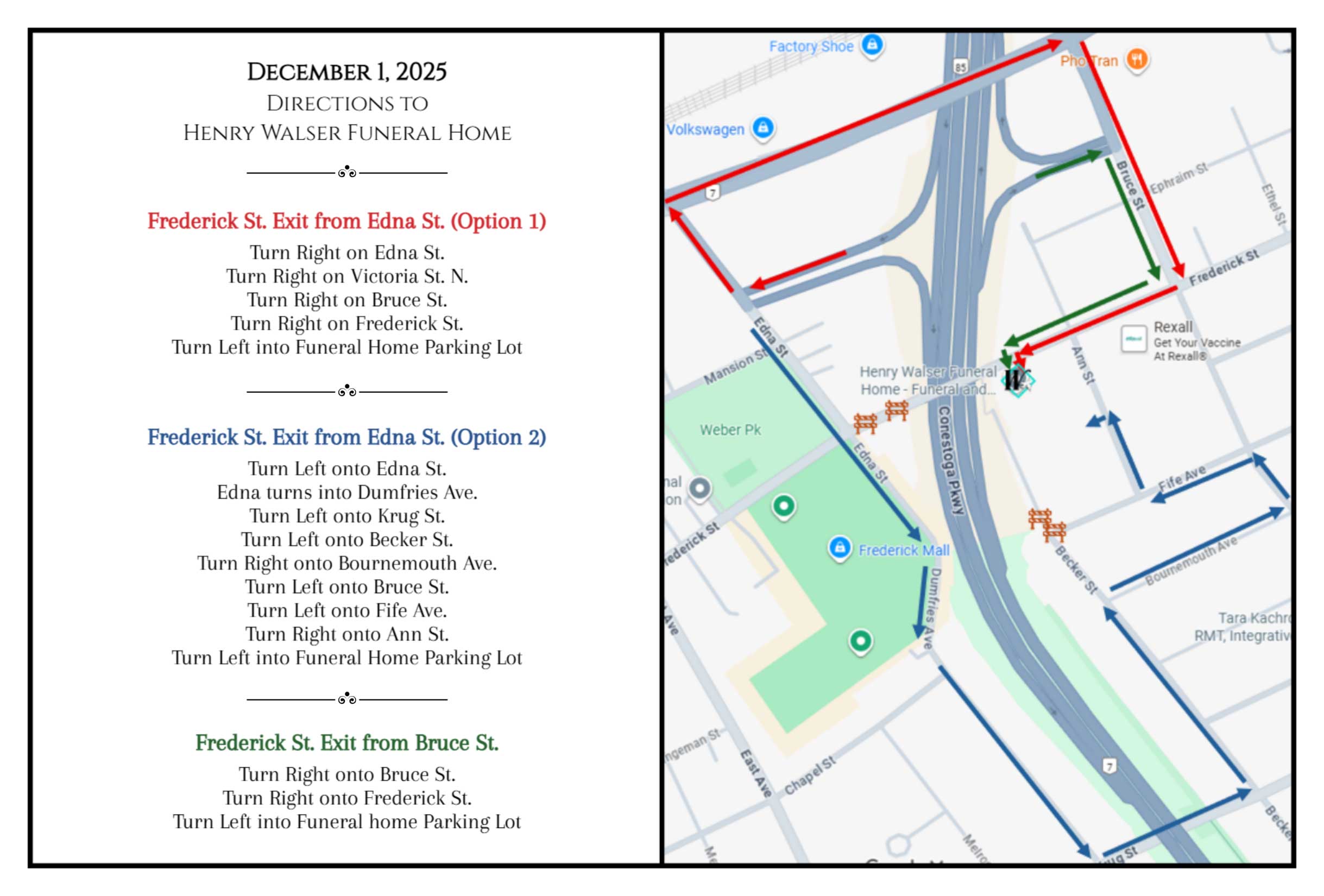
(Buses are even worse)
|
|

Can a community of otaku save their apartment building from gentrification? Should a community of otaku save their apartment building from gentrification?
Princess Jellyfish, volume 1 by Akiko Higashimura
|
|

How great would it be to talk with animals, through magic or technology or… whatever?
Five Books About Conversing With Animals
|
|
On this particularly bright and sleepless morning which began with a formal call from the career center, events otherwise known as ![[personal profile]](https://www.dreamwidth.org/img/silk/identity/user.png) radiantfracture and Existential Comics having conspired to bring the Tractactus to the forefront of my mind, I have decided that the most cursed translation of Wovon man nicht sprechen kann, darüber muss man schweigen is "I feel that if a person can't communicate, the very least he can do is to shut up." radiantfracture and Existential Comics having conspired to bring the Tractactus to the forefront of my mind, I have decided that the most cursed translation of Wovon man nicht sprechen kann, darüber muss man schweigen is "I feel that if a person can't communicate, the very least he can do is to shut up."Current Music: Tom Lehrer, "Alma"
|
|

Starmen marooned in barbaric America!
Hard Landing by Algis Budrys
|
|
So
|
Dec. 16th, 2025 @ 11:19 am
|
|---|
|
... I just beat Ornstein and Smough.
For anyone who would like context -- Symbalily meets and gets to grips with O&S, from the timestamp: https://youtu.be/3TKhwbveyVE?si=14uuwYlVq1ywUwRk&t=5681
|
|
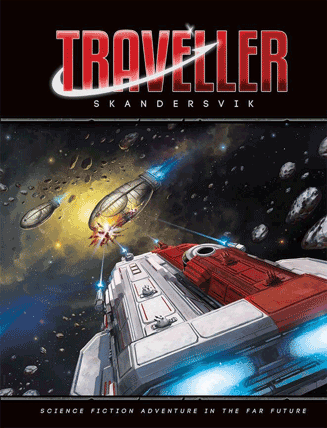
The TRAVELLER 2022 UPDATE corebook, ALIENS guides, sector sourcebooks, and more.
Bundle of Holding: Traveller Explorations (from 2022)
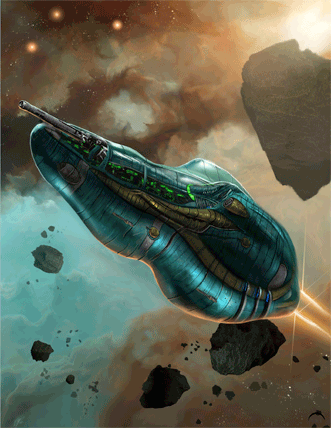
A high-power 800-page adventure for Mongoose Traveller that uncovers the greatest mysteries of Charted Space
Bundle of Holding: Traveller Ancients
|
|
|

